

Detroit Men's Health Exchange
Ready to ACTIVATE Men's Health?
Join the NAACP Center for Health Equity and the NAACP Detroit Branch for the Detroit Men's Health Exchange, hosted in partnership with Novartis and local stakeholders. Designed specifically for Black men and the broader Detroit community, this interactive experience brings together health education and screenings, self-care stations, and meaningful dialogue to improve health and well-being. The program features health experts, community leaders, advocates, and celebrity champions to promote prevention, early detection, and access to care, with a focus on prostate health and overall men's health.
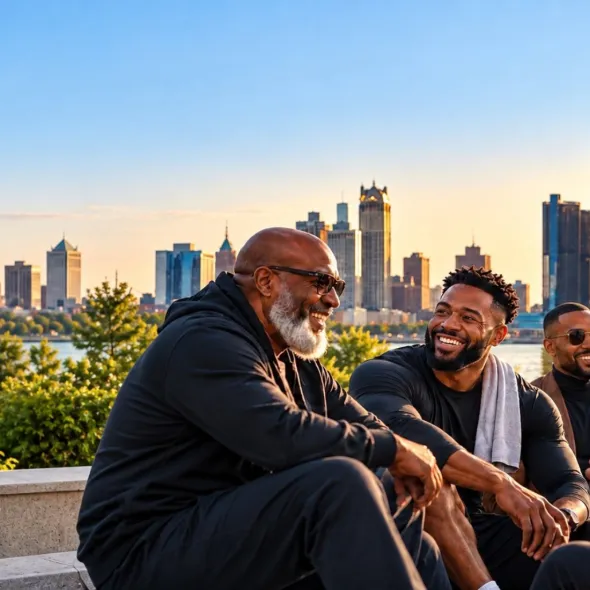
Join the Conversation
Wellness stations and hors d'oeuvres start at 6:00 PM ET; Program begins at 7:00 PM ET
Black men continue to face barriers to preventive care and early detection, making community-based education, access to screening, and trusted health resources critical to improving health outcomes.
The Detroit Men's Health Exchange will explore the importance of prevention in wellness, with a focus on prostate health. The program will address common myths and misconceptions about prostate cancer screening and highlight the simplicity of the PSA blood test. Through health screenings, care navigation, expert discussion, and community engagement, participants will have opportunities to connect with resources and take proactive steps toward their health.
Come out, get screened, and enjoy massages, facials, beard grooming, juicing, movement station, and conversations with celebrity guests!
MEET OUR EXPERTS
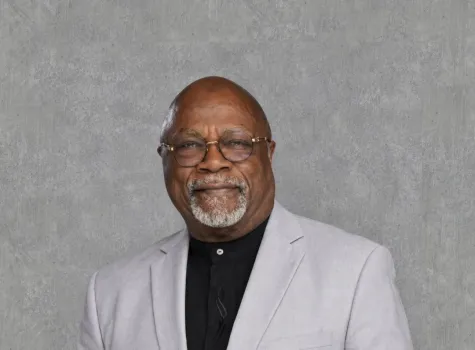
Rev. Dr. Wendell Anthony
Member, NAACP National Board of Directors
Vice Chair, NAACP Religious Affairs Committee
President, NAACP Detroit Branch
Reverend Dr. Wendell Anthony is a native of St. Louis, Missouri. He was educated in the Detroit PublicSchool system. He graduated from Wayne State University with a B.A. in Political Science and Marygrove College with an M.A. in Pastoral Ministry. He attended the University of Detroit for advanced study inBlack Theology. Rev. Anthony is a Certified Social Worker with the State of Michigan. On May 12, 2007, Rev. Anthony was the keynote speaker for the Graduation Class of Marygrove College at which time the Board of Trustees conferred upon Rev. Anthony the degree of Honorary Doctor of Arts. In 2022, Wayne State University conferred upon Rev. Anthony the degree of Doctor of Laws, Honoris Causa.
He became the Pastor of Fellowship Chapel in December 1986 following the passing of Reverend James E. Wadsworth, Jr. Through the grace of God and the labor of his ministry, the church has experienced the greatest growth in its 55-year history. Through its James E. Wadsworth, Jr. Community Center, Fellowship Chapel has a full-time outreach ministry with programs ranging from health and wellness, youth mentoring and development and job training.
Currently, Rev. Dr. Wendell Anthony is a member of the NAACP National Board of Directors. In addition, he is serving his 15th term as President of the Detroit Branch NAACP, a position he has held for 28 years. The Detroit Branch NAACP is the largest branch in the country. It hosts the largest sit-down dinner in the nation, bringing at least 10,000 persons to gather every year to celebrate and commemorate the struggle for social justice, freedom, and equality. He is the founder of the Freedom Institute for Economic, Social Justice, and People Empowerment, a 501(c)3 non-profit organization, which also sponsors the annual Freedom Weekend in the city of Detroit.
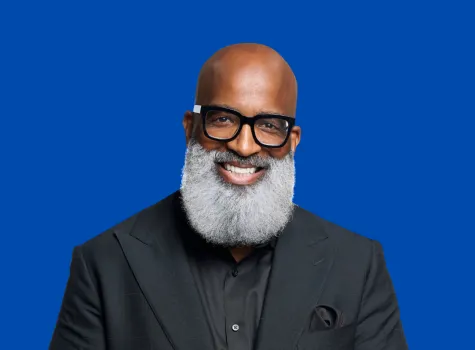
Jason Wilson
Best-selling Author, Visionary Founder, and Motivational Speaker
Jason Wilson is the best-selling author and visionary founder of the Yunion, a Detroit-based non-profit dedicated to youth development since 2003. Today, the Yunion has reached over 17,000 Metro Detroit youth through innovative prevention programming, workforce development, engaging workshops, trauma-informed care, and conferences.
In 2008, driven by a deep passion to guide African American boys towards a brighter future, Jason Wilson founded the Cave of Adullam Transformational Training Academy (CATTA). An expert in Emotional Stability Training®, Jason has been widely recognized for his innovative teachings at CATTA. His unique approach empowers young men to tackle their negative emotions with composure, fostering introspection and emotional resilience.
Jason's transformative work with the CATTA gained global recognition in 2016 when one of its videos went viral, amassing over 300 million views. This exposure opened doors to notable opportunities, including presenting the CATTA at President Obama's 'My Brother's Keeper' Showcase at the White House. In 2018, Jason signed with renowned actor and producer Laurence Fishburne's film company, Cinema Gypsy, to produce a documentary showcasing his incredible journey with the CATTA. The film made its world premiere at the Tribeca Film Festival in 2022, captivating audiences and earning prestigious accolades including Best Feature Documentary.
Beyond his inspiring professional endeavors, Jason possesses a wealth of experience in martial arts spanning over 25 years. His commitment to training and developing young Black males spans more than 16 years, leaving an indelible mark on their lives. Jason is a man of the Most High, a devoted husband of over 25 years and a loving father to two beautiful children.
Jason Wilson's extraordinary journey exemplifies the power of compassion, resilience, and unwavering dedication to empowering boys and men.
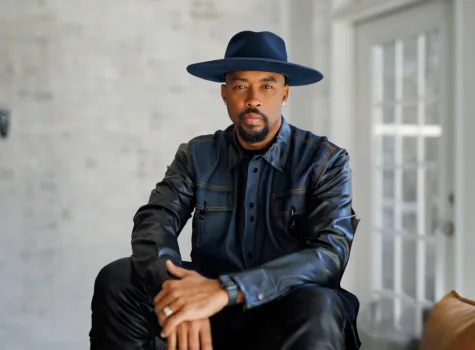
Montell Jordan
Author, Pastor, and Grammy Award-Winning Artist
2023 Presidential Lifetime Achievement Award
Doctor of Humane Letters (Honorary Degree)
Over his nearly twenty-year music career, Jordan has released seven studio albums and fourteen singles, and he is a Grammy Award-winning artist who has sold more than 10 million records worldwide.
From South Central Los Angeles to Pepperdine University in Malibu, Montell was on course to attend law school when a professor said one of his biggest regrets was missing the chance to pursue music. In a flash, Montell recognized that if he was ever going to take a shot at music, he needed to do it then. He put together a demo, which eventually landed in the hands of Def Jam Records and Russell Simmons. This Is How We Do It took off, and his first of many number one singles was born.
Montell began to realize the difference between gifting and calling. He was gifted to do music, but he was called to minister. Speaking, teaching, mentoring, counseling and writing are some of the many ways Jordan is fulfilling his purpose in ministry today. After serving as an executive pastor for Victory Church in Norcross GA for nearly a decade, he now has a marriage ministry with his wife Kristin where they assist public marriages to heal in private. Marriage Masterpeace is a 501(c)(3) non-profit organization. Montell has authored 2 books: "Becoming Unfamous" (his autobiography) and "This Is How We Do It! Making Your Marriage A Masterpeace" co-authored with his wife Kristin. In his musical past, Montell had already shown an ability to stretch boundaries of genre and style and uses this same ability to influence, impact and inspire today. Montell brings the word of God and personal experience from the music business to provide a practical and applicable understanding of music and worship to light. He still performs on world tours and loves to bring the love of Christ outside the four walls of the church to concert venues all over the world.
Montell is a Champion Ambassador for Special Olympics North America. Montell was diagnosed with early stage 1 prostate cancer in February of 2024 and had a radical prostatectomy surgery in November of 2025. 10 months later, cancer was again found in the prostate bed and left lymph node, and proton therapy was administered at Emory in Atlanta. Montell was declared "undetected" on Christmas Day, 2025, and is cancer-free. His music, ministry, marriage, and medical experiences have made Montell a sought-after leader to speak into each of these areas.

Marlon Fuller, PharmD
Associate Director, Medical Science Liaison, Novartis
Marlon Fuller, Pharm.D., is a respected pharmaceutical leader whose career reflects a deep commitment to science, service, health equity, and community impact. As an Associate Director, Radioligand Medical Science Liaison with Novartis Medical Affairs, Dr. Fuller supports regional medical education and scientific engagement in radioligand therapy, with a focus on advanced prostate cancer and neuroendocrine tumors. His work places him in one of oncology's most innovative and rapidly evolving areas, where scientific advancement has the potential to change lives for patients and families.
Throughout his career, Dr. Fuller has held roles in retail and hospital pharmacy along with increasing responsibility across leading pharmaceutical organizations, with experience spanning medical affairs, commercial strategy, and market access. He has contributed to important product launches in serious disease areas including Alzheimer's disease and cancer, conditions that have personally touched his family and continue to disproportionately affect underserved communities. His professional journey is grounded in a belief that medical innovation must be matched by access, education, and trust. In every role, he has worked to help bridge the gap between scientific progress and meaningful patient impact through physician education, strategic collaboration, and peer-to-peer medical dialogue.
Dr. Fuller is also deeply committed to developing future leaders in healthcare and the pharmaceutical industry. He has led the development of Medical Science Liaison teams and created educational programs that strengthen scientific excellence in the field. As a mentor, he has supported fellows, early-career professionals, and students, including those from Historically Black Colleges and Universities, as they navigate opportunities in pharmaceutical medicine. His dedication to service has been recognized through a prestigious national pharmaceutical industry award for exemplary community philanthropy.
Dr. Fuller brings to the panel the lived commitment of someone who understands that medical progress must reach every community.
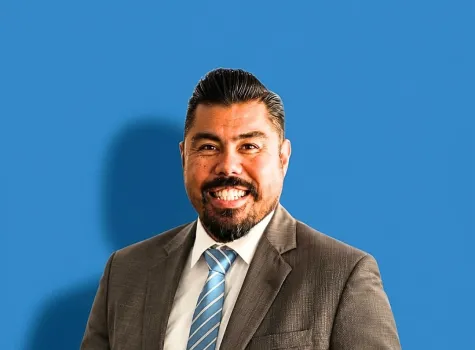
Fil Mendez Guipoco
Vice President, Community Outreach and Engagement, ZERO Prostate Cancer
Fil Mendez Guipoco is an award-winning bicultural nonprofit leader based in Chicago, with more than 30 years of experience in public health, chronic disease prevention, and community-based initiatives. He currently serves as Vice President of Community Outreach and Engagement for ZERO Prostate Cancer, the nation's leading prostate cancer organization providing cancer resources, programs and services to those at risk, diagnoses and their families. In this role, he leads Blitz the Barriers, a landmark initiative focused on eliminating prostate cancer disparities by increasing screening in pilot communities by 20%, with the goal of saving more than 100,000 lives.
Fil is a seasoned public health leader with more than two decades of experience advancing cardiovascular health, diabetes management, and health equity through the American Heart Association. His expertise includes program development, strategic partnerships, team leadership, and large-scale public health implementation. He has led impactful initiatives at the local, state, and national levels, including supporting the implementation of Chicago's and Illinois' Clean Indoor Air Act and developing the framwork for Automated External Defibrillator deployment at Chicago O'Hare International Airport, a model later adopted by airports nationwide. Most recently, Fil led national work in partnership with the Office of Minority Health and the Health Resources and Services Administration's National Hypertension Control Initiative, collaborating with more than 350 federally qualified health centers across 47 states to improve hypertesion control rates and reduce health disparities.
Fil serves on the board of the DuPage Mexican Cultural Center, as well as the West Chicago Parks Foundation. He is recognized for his commitment to health equity and for building inclusive partnerships thatdrive lasting impact across the nonprofit and public health sectors.
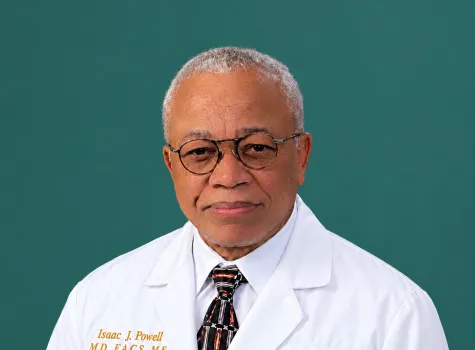
Isaac J. Powell, MD, FACS, MS
Professor, Urologic Oncology, and Director
Prostate Cancer Population Health Disparities
Karmanos Cancer Institute
Isaac J. Powell, M.D., has been a strong leader in the struggle to educate African American men regarding prostate cancer. He received his medical education at Indiana University School of Medicine in Indianapolis, IN, and has been a faculty member in the Department of Urology at Wayne State University in Detroit since 1986. He is currently a professor of urologic oncology at Karmanos Cancer Institute in Detroit. His commitment to cancer research is centered on the many ways prostate cancer impacts African Americans in comparison to other ethnic groups. His research is directed toward ethnic differences in the biology/genetics of prostate cancer. He was principal investigator of a nation-wide consortium of recruitment centers (medical centers) to recruit families to examine hereditary prostate cancer among African Americans.
He reported their initial results of 4 or 5 regions in the genome where genes responsible for hereditary prostate cancer may be found. As a part of an International Prostate Cancer Consortium Genetics (ICPCG) group, they have compared their results with other centers around the world. As leader of a collaboration at his institution, he is leading a team studying environmental factors that impact on genes such as diet and inflammation in correlation to clinical outcomes. He was funded to examine metabolic syndrome and prostate cancer, and they found that obesity and high fat diet is associated with aggressive prostate cancer. He, as the lead author, published that prostate cancer grows faster among African American men compared to European American men. He and his team recently completed a study using a special technique and found prostate cancer genes associated with advanced disease are more expressed among African American compared to European American men and account for higher death rate. In collaboration with Harvard, Cornell, Johns Hopkins and other Universities, they have studied and now have published DNA gene sequencing of prostate cancer to identify lethal cancers.
Currently he leads a team of investigators at his institution who have identified specific genes of the immune system responsible for prostate cancer progression, metastasis, and death. As a result, his team is developing a drug to inhibit these genes. The pre-clinical studies have identified 2 drugs used in sequence that inhibit the genes that initiate several genetic/biological pathways contributing to prostate cancer progression, recurrence and mortality. They are seeking funds to confirm the results.

Dr. Chris T. Pernell
Director, NAACP Center for Health Equity
Dr. Chris T. Pernell is a physician leader and social change agent dedicated to advancing health justice, community wellbeing, and population health. She serves as Director of the NAACP Center for Health Equity, where she leads efforts to drive equitable health outcomes and transform systems with a whole‑person approach. Before joining the NAACP, she founded The Esther Group, a public health consulting and strategy firm focused on helping organizations and communities innovate toward a healthier, more just future.
Previously, Dr. Chris was the first Chief Strategic Integration and Health Equity Officer at University Hospital in Newark, overseeing population health, strategic planning, community affairs, and patient experience. She also led workplace health and equity initiatives with 1199SEIU and healthcare partners across New York City. A recognized voice in preventive medicine, she has been honored by Insider NJ, ROI‑NJ, NJBiz, the American College of Preventive Medicine, and the New Jersey Public Health Association.
Known for her community work in the Greater Newark, New Jersey area, she was appointed to the Essex County Civilian Task Force as a medical expert. On Juneteenth 2023, she joined the New Jersey Reparations Council and served on its health equity committee. Dr. Pernell is a frequent contributor across television, radio, and print media, leveraging her lived experiences and insights as a public health physician and health equity champion.
Dr. Pernell advises leaders nationwide on racial justice, community wellbeing, and health equity. A graduate of Princeton, Duke, Columbia, and Johns Hopkins, she also serves as a clinical faculty member at Rutgers New Jersey Medical School and a faith leader with BET HaSHEM YHWH Worldwide Ministries, Inc., committed to transforming lives through love, truth, passion, and inspiration.
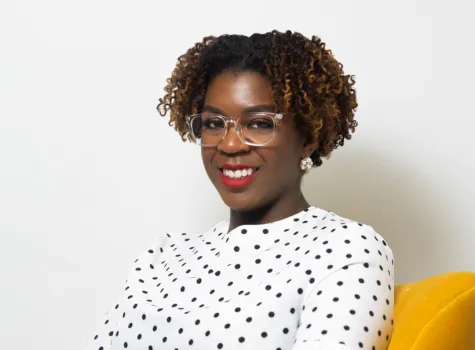
Tiffany Walker, LCSW
Senior Fellow, NAACP Center for Health Equity
Tiffany Walker, LCSW, is the Senior Fellow for the NAACP Center for Health Equity, where she advances health equity through systems change, public health strategy, and cross-sector collaboration. A clinician and systems architect, Tiffany helps organizations translate vision into scalable systems, frameworks, and infrastructure that improve health outcomes and create measurable impact.
Prior to joining the NAACP, Tiffany served as University Director of Student Wellness Services at Fairleigh Dickinson University, where she led strategy and operations for a multi-campus health and wellness department serving more than 11,000 students. She designed and implemented the university's first upstream public health framework, integrating education, prevention, early intervention, and compassionate care to strengthen student health, mental health, and student success.
Tiffany began her career as a program evaluator for college readiness programs, before moving into direct service as a school social worker. She has dedicated her work to improving the health and wellbeing of people through culturally responsive, equity-centered systems of care. Her current scholarship examines workplace harm as a public health issue, with a particular focus on how chronic exposure to microaggressions, discrimination, and institutional gaslighting shapes health, mental health, leadership identity, and career sustainability for Black women. She is the creator of the Lifecycle of Microaggressions® framework, which she uses to help institutions and executive teams identify where organizational culture and unaddressed harm quietly erode trust, performance, and long-term sustainability.
Tiffany is also the founder of Journey Therapy Center and its Per My Email platform, a coaching and learning space that supports Black women navigating racialized harm in professional environments. Through Per My Email, she provides speaking, coaching, and facilitation centered on regulation, recovery, and strategic clarity for Black women leaders working inside high-pressure, historically white-dominant systems.
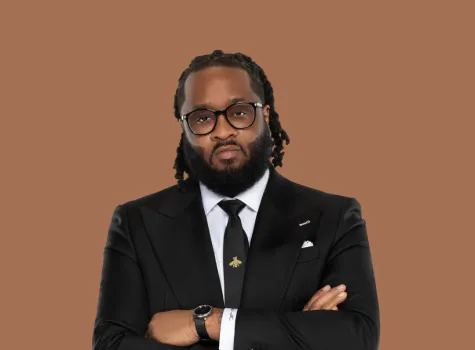
Rev. Kenneth Pierce II
1st Vice President and Chairman, Religious Affairs Committee
NAACP Detroit Branch
Rev. K.C. Pierce II is the eldest of two children, born into a loving, Christian home to Rev. Dr. Kenneth C. Pierce Sr. and Mrs. Ilean Pierce. He is a devoted husband to First Lady Shadea Pierce and a proud father to four beautiful children: Kenneth Pierce III, Ryan Darling, and twin daughters McKenzie and Kensley Pierce.
A graduate of Murray Wright High School, Pastor Pierce continued his education at Baker College and Oakland Community College. He later earned credentials from Ashland Theological Seminary and is currently pursuing his Master of Divinity at Virginia Union University.
Pastor Pierce accepted Christ at an early age and was baptized at Healing Spring Missionary Baptist Church in Highland Park, MI. In 1993, he joined Beulah Missionary Baptist Church, where he grew spiritually and accepted his call to ministry on March 31, 2009. That same day, under the leadership of his pastor and father, he was licensed to preach. For five years, he faithfully served as Youth Pastor and Music Director alongside his father.
In September 2014, Pastor Pierce was called to serve as the Senior Pastor of Hopewell Church in Detroit, MI. Under his dynamic leadership, the church has experienced significant growth and transformation, becoming a strong pillar in the community. Due to continued growth, Hopewell is now expanding and preparing to launch a second worship service to better serve its growing congregation. Pastor Pierce is also the visionary founder of the Hopewell Community Development Corporation, a nonprofit dedicated to uplifting the community, and the My Brother's Keeper mentorship program, which empowers young men in Detroit. Through his leadership, Hopewell has hosted impactful events such as the Community Baby Shower, which supports new mothers in Detroit and the surrounding metro area, along with a variety of other outreach initiatives that meet real needs and reflect Christ's love in action.
Outside the pulpit, Pastor Pierce is a dedicated community advocate. He serves as First Vice President, Executive Committee Member, and Chairman of the Religious Affairs Committee for the NAACP Detroit Branch. He has also served as Chair of the Advisory Board of Clergy for SEIU Detroit, championing the rights of workers in Detroit's Bedrock buildings, and currently serves as a Chaplain for the Wayne County Sheriff's Office.