
NAACP Releases Playbook for Frontline Communities to Stop Dirty Data Centers
FOR IMMEDIATE RELEASE
January 8, 2026
Contact: Chyna Fields, cfields@naacpnet.org
LAS VEGAS -- Today, the NAACP released 2026 Recommendations for Protecting Frontline Communities to Stop Dirty Data, a playbook outlining critical recommendations to ensure AI data centers are developed responsibly, equitably, and without causing environmental harm to Black, Brown, and low-income communities as well as community benefit agreement resources for data center buildouts.
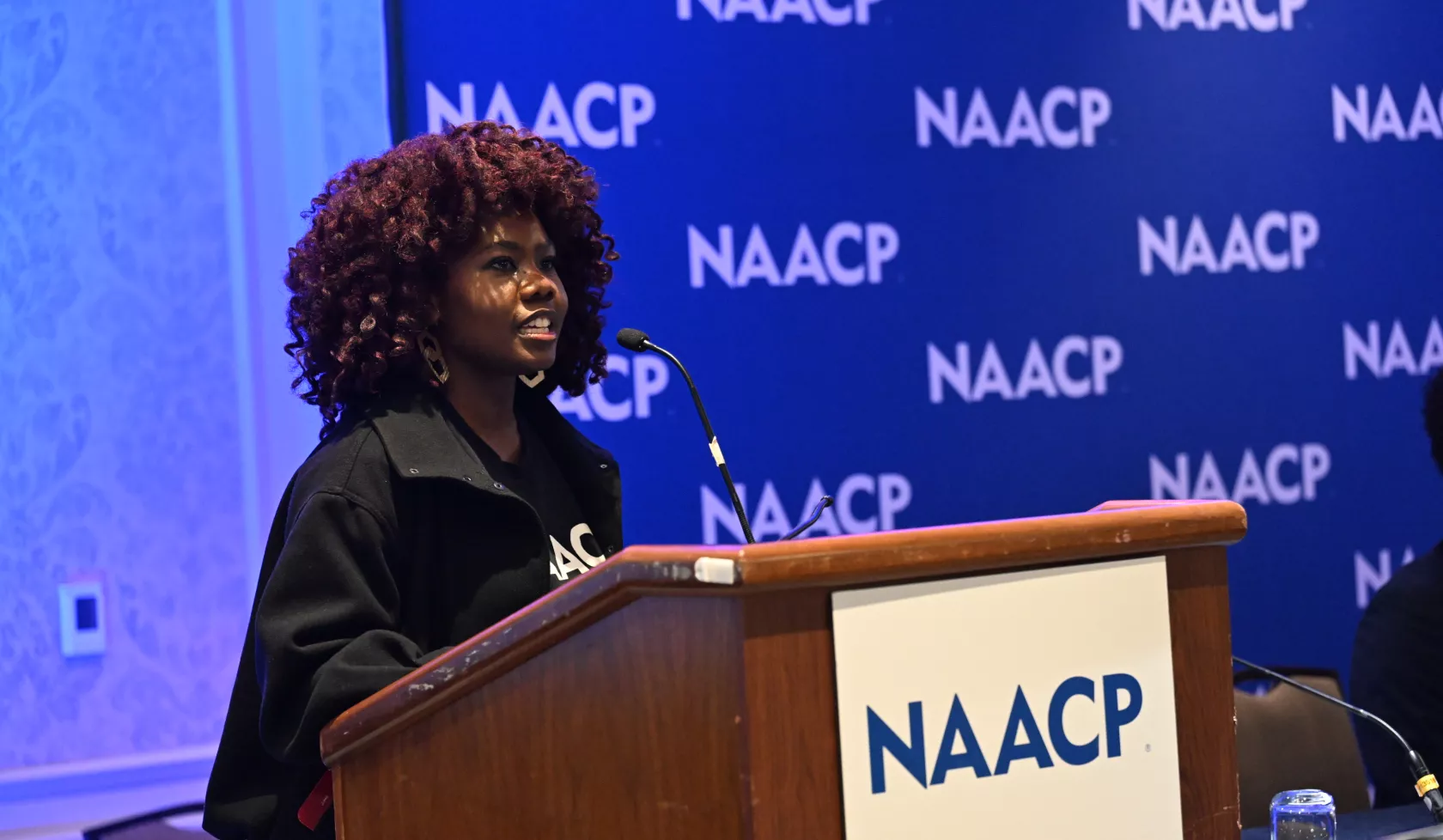
The Stop Dirty Data Recommendations were announced during the 2026 Consumer Electronics Show at a panel where NAACP President & CEO Derrick Johnson demonstrated how the Association is shaping emerging technology through policy and guidance so that it is built fairly and equitably.
"These Recommendations are about accountability and protection," said Derrick Johnson, President and CEO of the NAACP. "For too long, communities have been forced to absorb the environmental and economic costs of technological growth without safeguards or consent. During a midterm year, having a people powered plan is critical. These Recommendations make clear that innovation must not come at the expense of clean air, clean water, or affordable utilities. Our communities deserve to lead decision-making where they live in the AI era."
The NAACP's Recommendations follow the Stop Dirty Data: NAACP National Strategy Summit, held in December, which convened national civil rights leaders, policymakers, environmental justice advocates, researchers, and community organizers from across the country.
That summit marked a turning point in the national conversation on the real-world impacts of AI data center infrastructure — particularly the pollution, energy strain, water overuse, and rising utility costs increasingly linked to large-scale data centers.
The Recommendations call for data center developers, utilities, and policymakers to adopt standards that prioritize community health, transparency, and environmental responsibility, including:
- Meaningful community engagement and consent before siting or expanding data centers
- Transparency and accountability measures to ensure ongoing compliance and public reporting
- Community investment commitments that support local resilience and long-term sustainability
"These recommendations are grounded in what communities are already experiencing," said Abre' Conner, Director of the NAACP Center for Environmental and Climate Justice. "Data centers are not abstract — and the patterns are that they are physical facilities that consume massive resources and too often pollute the same neighborhoods already burdened by industry. These recommendations set a unified and proactive approach for how communities will come together during this critical time: communities must be protected, heard, and respected as AI infrastructure expands."
The 2026 Recommendations were created to serve as a national framework — guiding policymakers, regulators, local governments, and developers as AI data center growth accelerates across the country. The external Community Benefits Resources team consists of Carrie Cobb, the Bold Education Fund and Bold Alliance teams, Prof. Romany M. Webb at Columbia Law School and the Sabin Center for Climate Change Law, and Veronica Eady.
The NAACP will continue advocating for Black communities impacted by data center development, working to stop environmental harm, curb rising utility costs, and ensure that AI innovation advances civil rights, environmental justice, and economic equity. We will engage with federal, state, and local leaders to advance these recommendations and ensure they are reflected in policy, permitting, and regulatory decisions.
For more information on our Stop Dirty Data Centers campaign, visit our website.
###
About NAACP
The NAACP advocates, agitates, and litigates for the civil rights due to Black America. Our legacy is built on the foundation of grassroots activism by the biggest civil rights pioneers of the 20th century and is sustained by 21st century activists. From classrooms and courtrooms to city halls and Congress, our network of members across the country works to secure the social and political power that will end race-based discrimination. That work is rooted in racial equity, civic engagement, and supportive policies and institutions for all marginalized people. We are committed to a world without racism where Black people enjoy equitable opportunities in thriving communities.
NOTE: The Legal Defense Fund – also referred to as the NAACP-LDF - was founded in 1940 as a part of the NAACP, but now operates as a completely separate entity.